Greek mythology · Mythical wars
The Trojan War: the great epic of Greek mythology
The Trojan War in Greek mythology: from the Judgment of Paris to the sack of Ilium — ten years of siege, immortal heroes, and the quarrelling gods of Olympus.
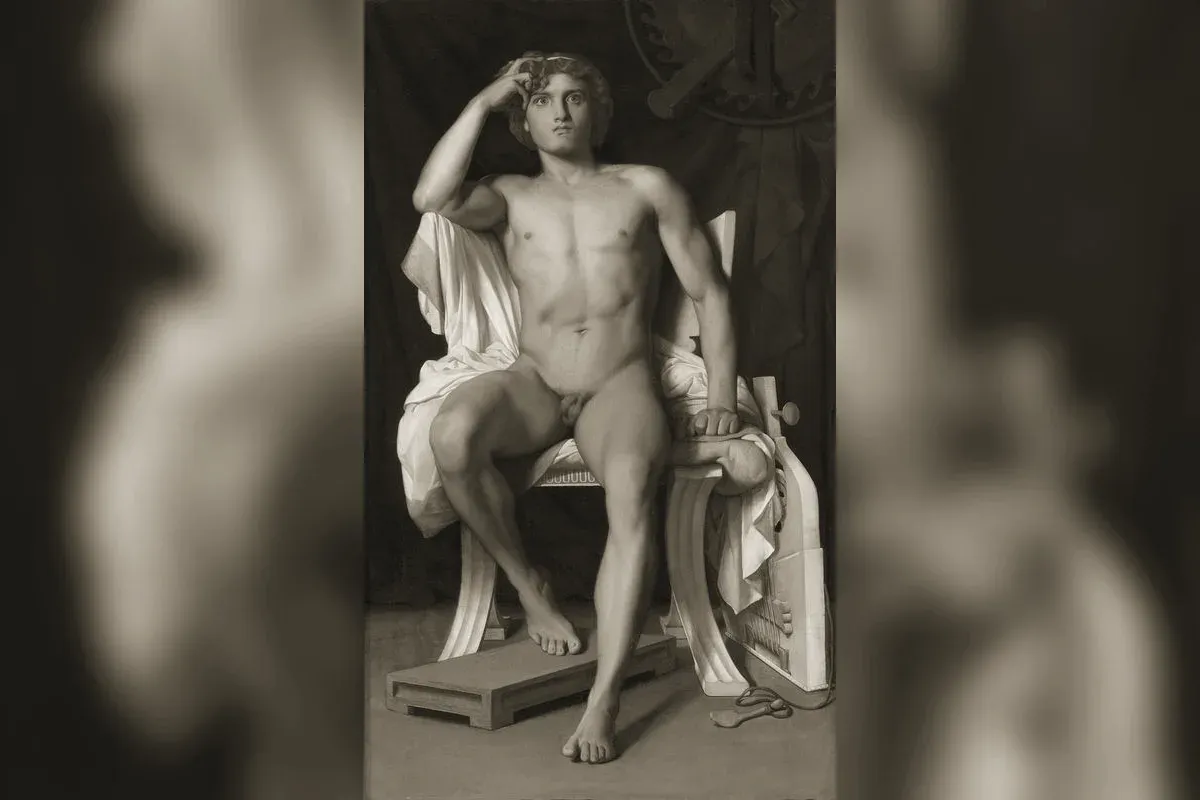
The Trojan War is the founding narrative of Western literature. Ten years of siege between a coalition of Greek kingdoms and the city of Ilium, heroes whose names have never faded, gods who descend to fight alongside mortals, and a destruction so complete that it still feeds collective memory three thousand years after Homer first put it into verse. This is where the very idea of epic is born: a story of glory and death in which every character knows, from the outset, that they will not emerge unscathed.
The divine origins of the conflict: the Judgment of Paris
Everything begins with a quarrel on Olympus. At the wedding of Peleus and Thetis — the future parents of Achilles — every deity is invited except Eris, goddess of Discord. In revenge, she rolls a golden apple among the guests inscribed with the words “To the fairest.” Three goddesses claim it at once: Hera, queen of the gods; Athena, goddess of wisdom and war; and Aphrodite, goddess of love.
Zeus refuses to judge and delegates the decision to Paris, son of King Priam of Troy, a shepherd on the slopes of Mount Ida. Each goddess offers a gift: Hera promises him sovereignty over the entire world; Athena offers wisdom and invincibility in battle; Aphrodite offers the love of the most beautiful woman in the world — Helen, wife of Menelaus, king of Sparta.
Paris chooses Aphrodite. That choice — passion over power and wisdom — sets the war in motion. Hera and Athena will never forgive Troy, and their implacable hostility will weigh on the Trojans until the city falls.
The abduction of Helen and the Greek coalition
Paris travels to Sparta as a guest of Menelaus. When the king is away, Paris departs with Helen — and a portion of the royal treasury. Whether Helen goes willingly or is taken by force varies depending on the source, but the outcome is the same: Menelaus summons his brother Agamemnon, king of Mycenae, to lead a punitive expedition.
The Greek kings had once sworn an oath — proposed by Odysseus — to defend the honour of whichever man Helen married. That oath binds the coalition. Achilles, Odysseus, Ajax, Diomedes, Nestor: the greatest warriors in Greece answer the call. A thousand ships gather in the harbour of Aulis.
The sacrifice of Iphigenia: the war begins with a death
At Aulis, the winds refuse to blow. The seer Calchas reveals the reason: Artemis is offended by Agamemnon — some versions cite a slain sacred deer, others a reckless boast. The goddess demands a human offering in return: Iphigenia, Agamemnon’s own daughter.
Agamemnon complies. Iphigenia is sacrificed at Aulis — or, in Euripides’ version, snatched away at the last moment by Artemis, who substitutes a deer and carries her off to Tauris. The winds return. The fleet sets sail.
This sacrifice frames the Trojan War from the start as a story of absolute cost: before the first sword blow falls, the commander-in-chief has killed his daughter. The tragedy of the House of Atreus — Clytemnestra murdering Agamemnon on his return, Orestes killing his mother — is born here.
Nine years of siege and the opening of the Iliad
The Greeks land in the Troad and lay siege to Ilium. The walls are strong, the Trojans well defended, and Apollo guards the city. For nine years, fighting alternates with truces, negotiations, and skirmishes around the walls. The war is as inconclusive as it is deadly.
It is in the tenth year that Homer’s Iliad begins. The poem covers only a few weeks, but those weeks contain the essence of the entire war: wrath, sacrifice, the deaths of the finest men, and the will of the gods crushing every human plan.
The wrath of Achilles: the heart of the Iliad
The first word of the Iliad is mènis — wrath. That wrath belongs to Achilles, the greatest warrior in the coalition, son of Peleus and the sea-nymph Thetis.
Apollo has sent a plague through the Greek camp to avenge his priest Chryses, whose daughter Agamemnon is holding captive. To appease the god, Agamemnon is forced to return her — and compensates himself by taking Briseis, the captive of Achilles. The seizure wounds Achilles in his timé, his warrior’s honour. He withdraws from battle with his Myrmidons.
Thetis intercedes with Zeus, who agrees to let the Trojans prevail until Agamemnon acknowledges the wrong. The Greeks, stripped of their finest fighter, are pushed back. Hector, son of Priam and champion of Troy, drives the enemy all the way to the ships.
This withdrawal illustrates a fundamental tension in Greek heroic thought: personal honour against collective interest. Achilles is right to feel wronged; he is wrong to let his companions die for it. The Iliad does not resolve the contradiction — it holds it open.
The death of Patroclus: the turning point
With Achilles still refusing to fight, his closest companion Patroclus asks permission to wear his armour and lead the Myrmidons into battle to rally the Greeks. Achilles reluctantly agrees, with one instruction: push the Trojans back, but do not advance to the walls of Troy.
Patroclus does not keep to the boundary. Carried forward by victory, he presses toward the walls. Apollo, Troy’s protector, shatters his armour with a blow and leaves him exposed. Euphorbus wounds him. Hector delivers the killing stroke.
The death of Patroclus is the emotional pivot of the entire epic. It breaks the logic of Achilles’ withdrawal: he is no longer the offended warrior sulking in his tent — he is a man in grief who wants vengeance. His anguish is absolute, and his return to battle has nothing to do with honour any more. He is driven by love and loss that place him beyond all calculation.
Achilles’ return and the death of Hector
Thetis has a new suit of armour forged for her son by Hephaestus — including the famous shield that Homer describes as a complete cosmography of the world engraved in metal.
Achilles re-enters the battle and cuts through the Trojan ranks. He meets Hector before the walls of Troy. Hector, abandoned by the gods who had sheltered Troy, is killed. Achilles drags his body behind his chariot for twelve days around the tomb of Patroclus, refusing to give it back.
The old king Priam, guided through the enemy lines in secret by Hermes, crosses alone into the night to beg Achilles for his son’s body. That scene — a father and a killer weeping together in the presence of death — is one of the most powerful moments in world literature. Achilles relents. The Iliad ends with the funeral rites of Hector.
The death of Achilles: prophecy fulfilled
The Iliad does not narrate the death of Achilles. It is told in other sources of the Troy cycle. Achilles had been given a choice between two fates: a long life without glory, or an early death and immortal fame. He chose the second.
Apollo guides the hand of Paris — a poor archer — and directs his arrow to the one vulnerable point on Achilles’ body: his heel, the only part that Thetis had not dipped in the Styx. The hero falls before the walls of Troy. Ajax and Odysseus manage to recover the body under a hail of arrows.
The death of Achilles mirrors that of Patroclus: the best fall because of Apollo, whose role as Troy’s defender is here pitiless. The thunderbolt of Zeus does not strike in the Trojan battlefield — but divine will is no less present in every arrow and every spear thrust.
The Trojan Horse: the stratagem that ends ten years of siege
With Achilles dead, the Greeks cannot take Troy by force. It is Odysseus who devises the final ruse. The craftsman Epeus, guided by Athena, builds in a matter of days a massive hollow wooden horse, large enough to conceal around twenty of the finest Greek warriors.
The Greek fleet raises anchor and disappears behind the island of Tenedos, making it appear the army has given up. A single man, Sinon, is left behind on the beach with instructions to persuade the Trojans that the horse is an offering to Athena or Poseidon.
The Trojans hesitate. Cassandra, the daughter of Priam gifted with prophecy — and cursed never to be believed — screams that the horse conceals Troy’s destruction. Laocoon, a priest of Apollo, hurls his spear into its wooden flank and begs his fellow citizens to be suspicious. But two serpents sent by Athena or Poseidon rise from the sea and crush Laocoon and his sons. The Trojans read this as punishment for desecrating the sacred offering. They tear down a section of the walls to bring the horse inside.
That night, while Troy celebrates its supposed deliverance, the Greek warriors climb out of the horse, open the gates to the army that has slipped back in darkness, and the sack begins.
The sack of Troy and the aftermath
The destruction of Ilium is total. The men are killed, the women and children enslaved, the temples desecrated. Priam is slaughtered at the altar of Zeus Herkeios. Cassandra is torn from the temple of Athena and taken as a captive by Agamemnon.
Athena, furious at the sacrileges committed in her sanctuaries, turns against the victorious Greeks and unleashes storms on their homeward fleets. Agamemnon will be murdered by his wife Clytemnestra upon returning to Mycenae. Ajax the Lesser will die at sea. And Odysseus will wander for ten more years before seeing Ithaca again — that wandering is the subject of the Odyssey.
Only Aeneas, son of Aphrodite, escapes from the burning city, carrying his aged father Anchises on his shoulders and leading his son Ascanius by the hand. His future fate — the founding of Rome — would be sung by Virgil in the Aeneid.
The Trojan War in the Greek epic tradition
The Trojan War is not simply one episode among many: it is the convergence point of the entire Greek heroic tradition. Almost every great hero of the preceding generation — those who slew monsters, completed impossible tasks, and founded cities — sent their descendants to Troy.
The Labors of Heracles had established the heroic template that Achilles, Theseus, and their contemporaries would inherit and transform. The Trojan War is the twilight of the heroic age: after it, the gods recede, the heroes disappear, and ordinary humanity begins.
This is also why the war functions as a prism for Greek moral thought. Ares, god of brutal warfare, fights for Troy; Athena and Hera back the Greeks — yet Athena’s favour does not protect the Greeks from their own sacrilege. Victory does not confer innocence. The sack of Troy is as much a Greek crime as a Greek triumph.
Ancient sources and legacy
Homer’s Iliad and Odyssey are only two fragments of a vast Troy Cycle now almost entirely lost. The Cypria, Aethiopis, Little Iliad, Sack of Ilium, Returns, and Telegony once covered the whole conflict and its aftermath; only summaries and quotations survive.
Apollodorus synthesises the tradition in his Epitome. Ovid revisits transformations connected to the war in his Metamorphoses. Euripides and Sophocles staged specific episodes — Iphigenia at Aulis, Hecuba, The Trojan Women, Ajax. Virgil makes Aeneas the link between destroyed Troy and nascent Rome.
Greek pottery — from black-figure to red-figure vases, temple friezes to painted terracotta — transmitted these stories visually across generations that had no access to written texts. The Trojan War has survived not only as literature but as image, and that double transmission is part of why it endures.
Further reading
For the full story of the judgement that starts it all — the apple of discord, the three goddesses’ offers, and Paris’s choice — read the Judgement of Paris. For the central hero of the conflict, see the profile of Achilles. For the goddess who orchestrates the Greek victory from Olympus, see Athena. For what happens to Odysseus after Troy, read the Odyssey. To understand the divine framework surrounding the war, see Zeus and his thunderbolt. For the heroic generation that preceded the Trojan War, see the Labors of Heracles and the profile of Theseus.
Story beats
- 01The Judgment of Paris: the Apple of Discord and the choice between Hera, Athena, and Aphrodite
- 02The abduction of Helen and the call to the Greek kings
- 03The sacrifice of Iphigenia at Aulis and the fleet's departure
- 04Nine years of inconclusive siege and Homer's Iliad
- 05The wrath of Achilles: quarrel with Agamemnon, withdrawal from battle
- 06The death of Patroclus and Achilles' return to the fight
- 07The death of Hector, whose body is ransomed back to Priam
- 08The death of Achilles: arrow guided by Apollo and Paris
- 09The Trojan Horse: Odysseus's stratagem
- 10The sack of Troy and the scattering of the Greek heroes
Ancient sources
- Homer, Iliad
- Homer, Odyssey
- Virgil, Aeneid
- Apollodorus, Epitome
- Ovid, Metamorphoses
See also
Related entries
- Hector, prince of Troy and champion of the Trojans in Greek mythology
- Achilles, hero of the Trojan War in Greek mythology
- Athena, goddess of wisdom and strategic warfare
- Hera, queen of the gods and goddess of marriage
- Apollo, god of light, arts and prophecy in Greek mythology
- Hermes, messenger of the gods and guide of souls
- Ares, god of war in Greek mythology
- Mount Olympus: home of the gods in Greek mythology
- Troy, the Legendary City at the Heart of Greek Mythology
- The Thunderbolt of Zeus: divine weapon and symbol of supreme power
Frequently asked questions
Was the Trojan War a real historical event?
Archaeologists have identified at Hissarlik in modern Turkey the ruins of several successive cities called Troy. The layer known as Troy VIIa (c. 1180 BCE) shows signs of violent destruction contemporary with the epic tradition. Most scholars now accept that a real conflict may have inspired the Homeric tradition, even if the mythic details — Helen, the Trojan Horse, divine intervention — belong to epic fiction.
Why does Achilles refuse to fight at the start of the Iliad?
Achilles fell into conflict with Agamemnon, the supreme commander of the Greek coalition, who took his captive Briseis from him. Wounded in his warrior's honour — his timé — Achilles refuses to fight and asks his mother Thetis to persuade Zeus to let the Greeks suffer defeats without him. This initial wrath (mènis) is the first word and central subject of the Iliad.
How does the Trojan Horse work?
The stratagem, attributed to Odysseus and built by the craftsman Epeus with Athena's help, involves constructing a massive hollow wooden horse. Around twenty elite Greek warriors hide inside. The Greek fleet pretends to sail away. The Trojans, believing it an offering to Poseidon or Athena, bring the horse inside the city despite warnings from Cassandra and Laocoon. At night the warriors emerge and open the gates to the Greek army that has secretly returned.