Norse mythology · Mythical wars
Ragnarök: the Twilight of the Gods in Norse mythology
Ragnarök, the Norse end of the world: the Fimbulwinter, the breaking of chains, the gods' final duels, the collapse of the cosmos, and the world's rebirth.
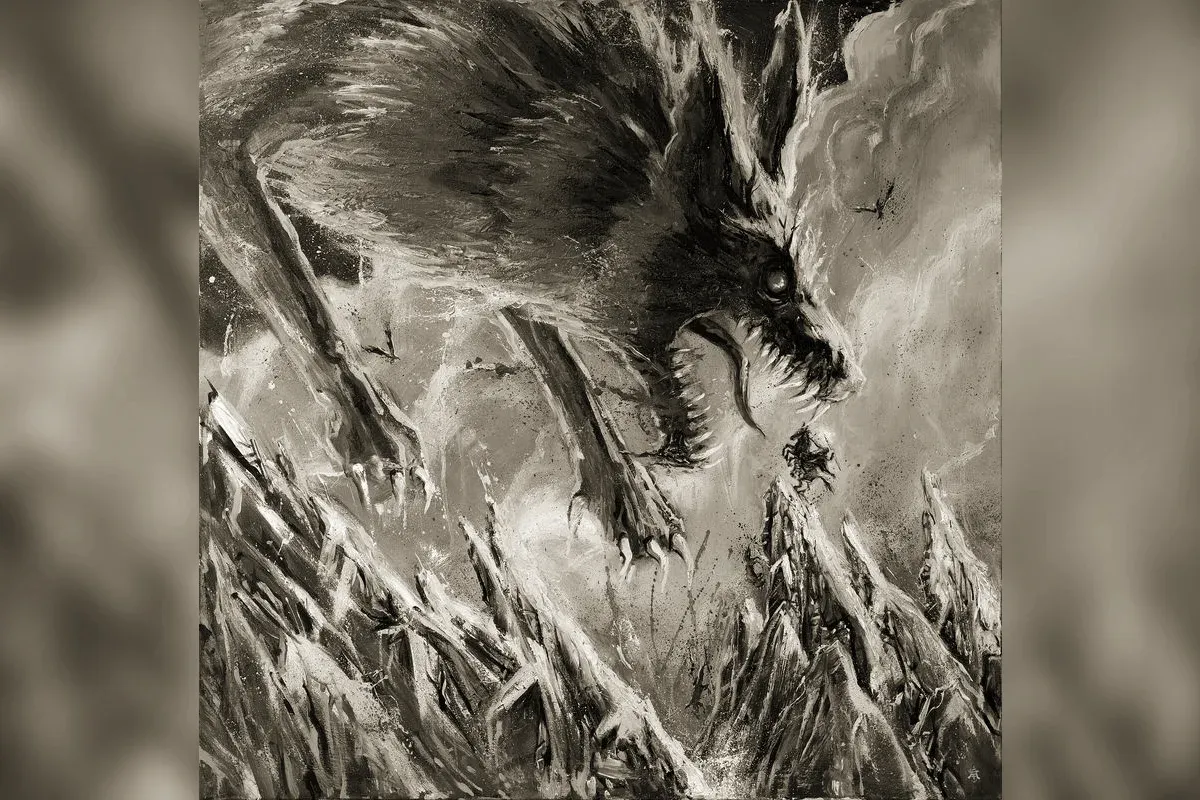
What is Ragnarök?
Ragnarök is the end of the world in Norse mythology — the moment prophesied since creation when gods, giants, monsters, and humans clash in a final battle that destroys the cosmos. This is not simply a catastrophe: it is the fate written into the very structure of the Norse world, known and accepted by the gods who prepare for it without being able to prevent it.
The prophecy of Ragnarök colours all of Norse mythology. When Odin sacrifices his eye, gathers the dead in Valhalla, or questions oracles, it is to delay this moment or prepare for it. When Loki orchestrates the death of Baldr, he activates a chain of events that hastens the end. Ragnarök is less an episode than an existential perspective that runs through all Norse myth.
The omens: Baldr’s death and the Fimbulwinter
Ragnarök does not come without warning. The Eddas describe a series of omens heralding the catastrophe.
Baldr’s death is the first great sign. When the god of light is killed by Loki’s cunning, and Loki is bound in a cave for his crime, the Norse cosmos begins to break down. The loss of the most innocent deity and the punishment of the trickster create an unbearable cosmic tension.
The Fimbulwinter (Fimbulvetr, “the mighty winter”) is the climatic omen: three consecutive winters without summer, where cold and darkness cover the world, crops die, and men kill each other — even brothers and fathers. Social bonds collapse. It is the dissolution of the human fabric before the dissolution of the cosmic fabric.
Signs in the sky accompany these events: the sun and moon, pursued since the beginning of time by the wolves Sköll and Hati, are finally caught and devoured. The stars go out.
The breaking of bonds
Then the chains break.
Fenrir snaps Gleipnir, the magical bond that had held him on the island of Lyngvi since time immemorial. His jaws open from earth to sky.
Loki, bound in his cave since Baldr’s death, breaks free during the Fimbulwinter. He boards the ship Naglfar — built from the nails and teeth of the dead — and steers an army of Jötnar towards Asgard.
Jörmungandr, the World Serpent, rises from the ocean that encircled Midgard, dissolving the cosmic ring. It spews its venom into the air and across the land.
Surtr, the fire giant of Muspelheim, marches north with his blazing host, wielding a sword that burns brighter than the sun.
Heimdall, the guardian of Bifröst, sounds his horn Gjallarhorn — a blast that resounds through the nine worlds, waking the gods and the Einherjar for the final battle.
The gods assemble
Odin arms the Einherjar — the warriors who have been training in Valhalla for centuries — and leads Asgard’s army into battle. Freya rides with the Valkyries. Thor advances with Mjolnir. Tyr takes his sword in his single hand. Freyr rides out — but without his magical sword, which he entrusted to his servant Skírnir during the quest for Gerðr. This absence will cost him his life.
The Bifröst bridge collapses under the weight of Surtr’s army.
The singular duels
The battle of Ragnarök is structured around several prophetic duels, each decided since the beginning of the world.
Odin versus Fenrir
Odin faces Fenrir, the wolf he has always known would be his killer. Fenrir’s jaws stretch from earth to sky. Odin fights the wolf with his spear Gungnir — but is ultimately swallowed.
His son Víðarr avenges him immediately. Víðarr wears a magical shoe (or, in other versions, transfixes the wolf with his spear) and tears Fenrir’s jaw apart, killing the beast. Odin is avenged.
Thor versus Jörmungandr
Thor and Jörmungandr meet for the third and final time. Thor strikes the serpent with Mjolnir and kills it. But Jörmungandr’s venom has soaked into him — Thor takes nine steps after the serpent’s death, then collapses, claimed by the poison.
Freyr versus Surtr
Freyr, without his magical sword, faces the fire giant Surtr. The outcome is inevitable: Freyr is killed. This death illustrates the price of worldly desires — he sacrificed his greatest weapon for love, and that choice condemns him at Ragnarök.
Tyr versus Garm
Tyr, the god of justice, faces Garm, the monstrous hound guarding the entrance to Niflheim. They kill each other — justice and the guardian of chaos cancelling each other out.
Loki versus Heimdall
Loki and Heimdall, who have always opposed each other (Heimdall is Asgard’s guardian, Loki its permanent infiltrator), kill each other at Ragnarök. Two antagonistic principles that destroy each other simultaneously.
The collapse of the world
After the duels, Surtr releases the fires of Muspelheim upon the world. Flames engulf the earth, the sky blazes. Yggdrasil, the world-tree, shudders and begins to fall.
The earth sinks into the ocean. The stars are extinguished. The sky closes.
The universe returns to chaos — to the Ginnungagap, the primordial void that preceded creation.
The rebirth
But Ragnarök is not an absolute end. The Völuspá is explicit: a new earth rises from the water, green and fertile. New gold fields glimmer where the old fields burned.
The surviving gods reunite: Víðarr and Váli (sons of Odin), Magni and Móðr (sons of Thor). Above all, Baldr and Höðr return from the underworld — the death of the god of light proves temporary in the grand cosmic cycle.
The only two humans to survive — Líf (Life) and Lífþrasir (Eager for Life) — hid in the forest of Hoddmímisholt during the destruction. They are the ones who will repopulate the new world.
What the ancient sources say
The Völuspá (Poetic Edda) is the foundational text: a völva summoned by Odin recites the complete history of the cosmos from creation to Ragnarök and the rebirth. Her prophecy is both poetic and precise, covering the deaths of the principal gods and the emergence of the new world. The Vafþrúðnismál provides a complementary vision in a dialogue between a disguised Odin and the all-knowing giant Vafþrúðnir. Snorri Sturluson’s Gylfaginning (c. 1220) synthesises the traditions and gives the most complete prose narrative.
Further reading
For the principal actors in this final battle, read the pages on Odin, Thor, and Loki. For the guardian whose horn sounds the cosmic alarm, see the page on Heimdall. For the creatures that trigger the catastrophe, see the pages on Fenrir and Jörmungandr. For Baldr’s death, which prepares the final fall, read the story of Baldr’s death.
Story beats
- 01The Fimbulwinter: three consecutive winters without summer
- 02The death of Baldr and Loki's binding as omens
- 03The breaking of bonds: Fenrir, Loki, Jörmungandr break free
- 04The crossing of Bifröst and the shaking of Asgard
- 05The singular duels: Odin/Fenrir, Thor/Jörmungandr, Freyr/Surtr, Tyr/Garm, Loki/Heimdall
- 06The collapse of the world: the earth sinks into the ocean
- 07The rebirth: a new world rises, Baldr returns, life begins again
Ancient sources
- Völuspá (Poetic Edda, 11th–12th century)
- Vafþrúðnismál (Poetic Edda)
- Gylfaginning (Prose Edda, Snorri Sturluson, c. 1220)
- Lokasenna (Poetic Edda)
See also
Related entries
- Odin, Allfather and ruler of Valhalla in Norse mythology
- Thor, god of thunder and protector of mankind in Norse mythology
- Freya, Norse goddess of love, magic, and war
- Tyr, Norse god of law and war
- Heimdall, guardian of Asgard and herald of Ragnarök
- Loki, Norse god of mischief and chaos in Norse mythology
- Fenrir, the giant wolf of Norse mythology
- Jörmungandr, the World Serpent of Norse mythology
Frequently asked questions
Does Ragnarök really mean 'Twilight of the Gods'?
The etymology is debated. *Ragnarök* comes from Old Norse *regin* (the gods, the powers) and *rök* (fate, judgement, darkness). Some manuscripts read *Ragnarøkkr*, which would mean 'Darkness of the Gods'. Richard Wagner popularised 'Götterdämmerung' (Twilight of the Gods) in his opera, influenced by a poetic reading. A more literal translation would be 'Fate of the Gods' or 'Doom of the Powers'.
Do all the gods die at Ragnarök?
No. Several gods and beings survive: Víðarr and Váli (sons of Odin), Magni and Móðr (sons of Thor), Höðr and Baldr (who returns from the dead), Hœnir, and two humans — Líf and Lífþrasir — who hide in the forest of Hoddmímisholt. They are the ones who will repopulate the new world. Ragnarök is a cycle, not an absolute end.
Is Ragnarök inevitable?
Yes, according to the Norse sources. Odin himself, despite all his wisdom and preparation (gathering warriors in Valhalla, consulting oracles, wandering the nine worlds), knows he will be devoured by Fenrir. This awareness of inescapable fate is at the heart of Norse ethics: to act with nobility and courage even when you know the end is inevitable. Courage is not the hope of victory — it is the willingness to face what cannot be avoided.