Norse mythology · Gods & goddesses
Freya, Norse goddess of love, magic, and war
Freya in Norse mythology: goddess of love, fertility, and seiðr magic, commander of the Valkyries, and ruler of Fólkvangr where she receives half of all warriors slain in battle.
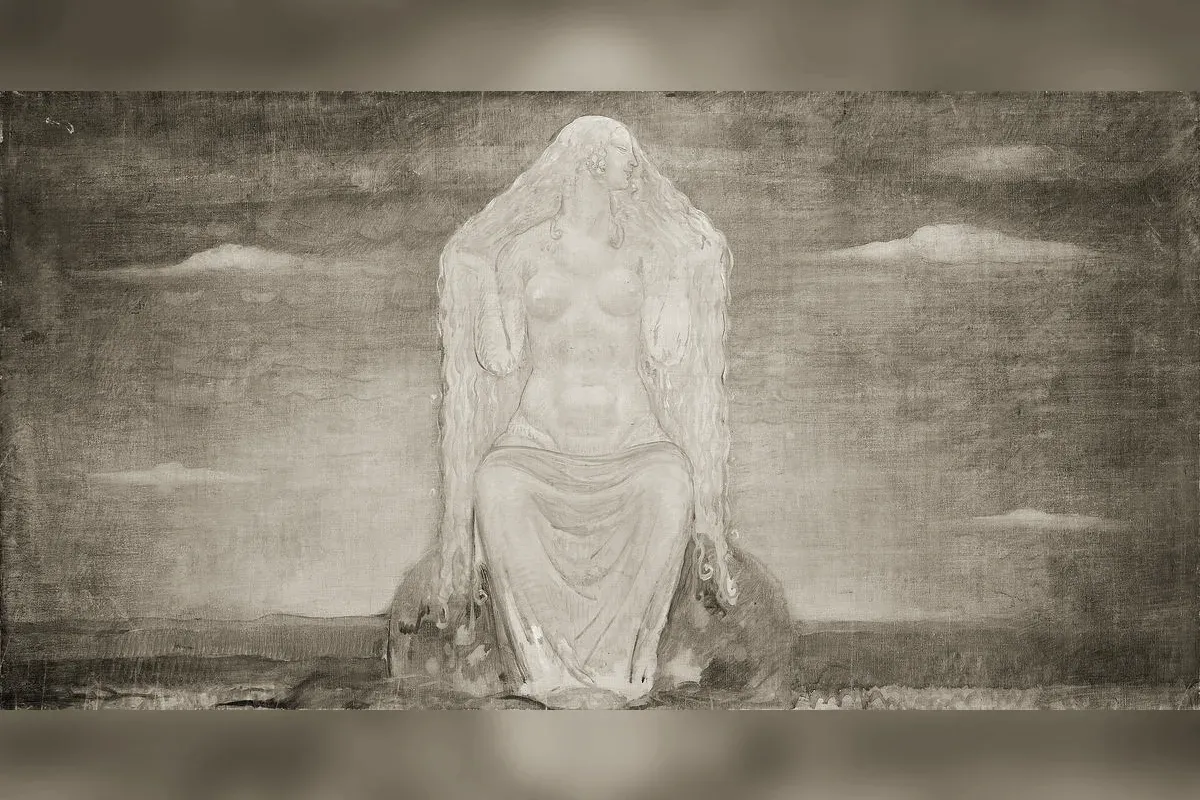
Who is Freya?
Freya is the most powerful and widely venerated goddess in the Norse pantheon after Odin. Goddess of love, desire, fertility, gold, magic and war, she is a figure of exceptional richness: not simply a goddess of romantic love, but a sovereign who presides over both birth and the glorious dead, over seduction and seiðr, over beauty and battle.
Role, nature and domains
Freya is of Vanir origin — she belongs to the Vanir, a divine family associated with fertility, prosperity and magic, distinct from the Aesir such as Odin and Thor. After the war between Aesir and Vanir, she is sent to the Aesir as a peace hostage, alongside her brother Freyr and her father Njörd. It is she who teaches Odin the magic of seiðr — the shamanic and divinatory art associated with women in Norse society — making this transmission of knowledge a fundamental fact of Norse cosmology.
Her domains overlap in ways that seem contradictory to a modern sensibility: she presides over both erotic love and glorious death in battle. She chooses half the warriors killed on the battlefield to welcome them into her domain Fólkvangr (“the field of the people”) — the other half going to Odin’s Valhalla.
Fólkvangr and the honoured dead
Fólkvangr is Freya’s domain in the Norse universe, distinct from Asgard. Her main hall is called Sessrúmnir (“rich in seats”), suggesting a reception space as significant as Odin’s Valhalla.
This sovereignty over the battle-dead is inseparable from the role of the Valkyries: Freya is their commander. These female warrior figures choose the elect on the battlefield — a role she shares (or oversees) with Odin. The precise division between Odin’s and Freya’s shares of the slain varies across sources.
Seiðr: Freya as mistress of magic
Seiðr is the most powerful magic in Norse mythology — and Freya is its source. She teaches it to Odin, who learns it despite the social stigma attached to this feminine practice.
Seiðr is a magic of knowledge and transformation: it grants the ability to see the future, influence destinies, and travel to other worlds in a shamanic trance. It is practised by völur (seeresses-shamans), the emblematic figures of Norse spirituality. Freya is the völva par excellence — the one whose magical knowledge surpasses that of all the gods.
Brísingamen and Freya’s attributes
Brísingamen is Freya’s necklace — the most precious and coveted object in Norse mythology after Mjöllnir. It is forged by four dwarves (Álfrigg, Dvalinn, Berlingr and Grerr), and Freya agrees to spend a night with each of them in exchange.
Loki steals the necklace from her while she sleeps — perhaps acting on Odin’s orders — and Freya recovers it after a confrontation with the guardian god Heimdallr. This myth illustrates both the absolute value of the ornament and Freya’s power over desire — divine and otherwise.
Her other attributes:
- A falcon-feather cloak that allows her to transform into a falcon and fly between worlds — which she sometimes lends to other gods.
- A chariot drawn by two cats (symbols of her unpredictable and independent character).
- A boar Hildisvíni (“battle swine”) that she rides and which is, in some traditions, her lover disguised as an animal.
The search for Óðr: tears of gold
Freya is the wife of Óðr, a mysterious figure of whom the sources give few details. Óðr regularly departs on distant travels — or perhaps represents an absent, unreachable object of desire. Freya weeps his absence in tears of gold (or amber in some versions). She searches for him across the worlds, taking different forms and names in her quest.
Skaldic poetry calls gold “Freya’s tears”, testimony to the deep association between this goddess, romantic grief and precious metals.
Some scholars identify Óðr with Odin himself — a possible reading but not confirmed by the surviving sources.
Freya and Loki
In several myths, Loki plays a particular role in relation to Freya: he steals Brísingamen, insults her honour during the Lokasenna, and the giant Þrym demands her as his bride in exchange for the stolen Mjöllnir — a demand the gods refuse, sending Thor in disguise instead, as told in The Theft of Mjolnir.
This tension between Loki and Freya reflects a deeper dynamic: Loki embodies the chaos that desires what Freya’s beauty and power symbolise — and Freya, sovereign of magic, resists him.
What the ancient sources say
Snorri Sturluson’s Prose Edda (c. 1220) is the most systematic source on Freya. The Gylfaginning describes her domain, attributes and Vanir origin. The Skáldskaparmál catalogues the poetic kennings attached to her. The Poetic Edda contains several texts in which she appears: the Völuspá (whose seeress she may embody), the Þrymskviða (in which her marriage is demanded and refused). Adam of Bremen describes the Uppsala triad as Thor, Wodan/Odin and Fricco/Freyr; this source is therefore useful for the wider Vanir cult context, but not direct evidence for a statue of Freya at Uppsala.
Further reading
For the supreme god who learns seiðr from her, read the page on Odin. For the son of Odin and god of thunder, see the page on Thor. For the trickster who covets and steals her attributes, consult the page on Loki. To compare Freya with the other great love deities — Aphrodite, Venus, Hathor — see Gods of Love in World Mythologies. For her brother, the Vanir god of fertility and peace, read the page on Freyr, and for their father, god of the sea and wealth, the page on Njörd. For the story where her hand was nearly promised to a giant, read The Theft of Mjolnir.
See also
Related entries
Stories featuring this entity
Comparisons
Frequently asked questions
Are Freya and Frigg the same goddess?
No, though they are frequently confused. Frigg is Odin's official wife, queen of Asgard, associated with motherhood and the household. Freya is a Vanir goddess linked to erotic love, magic, and war. Structural similarities led some scholars (such as Jakob Grimm) to propose a common Germanic origin, but in the Norse sources they are clearly distinct figures.
Why does Freya weep gold?
Freya weeps for her missing husband Óðr in tears of gold — or in some versions, in red tears like amber. This motif reflects her association with precious metals and wealth as much as with romantic grief. Gold was sometimes called 'Freya's tears' in skaldic verse.
What is Freya's role at Ragnarök?
The sources are less explicit about Freya at Ragnarök than about Odin or Thor. As commander of the Valkyries and ruler of Fólkvangr, she receives half of all warriors slain in battle — the other half going to Odin's Valhalla. Her fate at Ragnarök itself is not clearly described in the surviving sources.