Norse mythology · Gods & goddesses
Loki, Norse god of mischief and chaos in Norse mythology
Loki in Norse mythology: trickster of the Aesir, father of Fenrir, the World Serpent and Hel, architect of Baldr's death, and leader of chaos forces at Ragnarök.
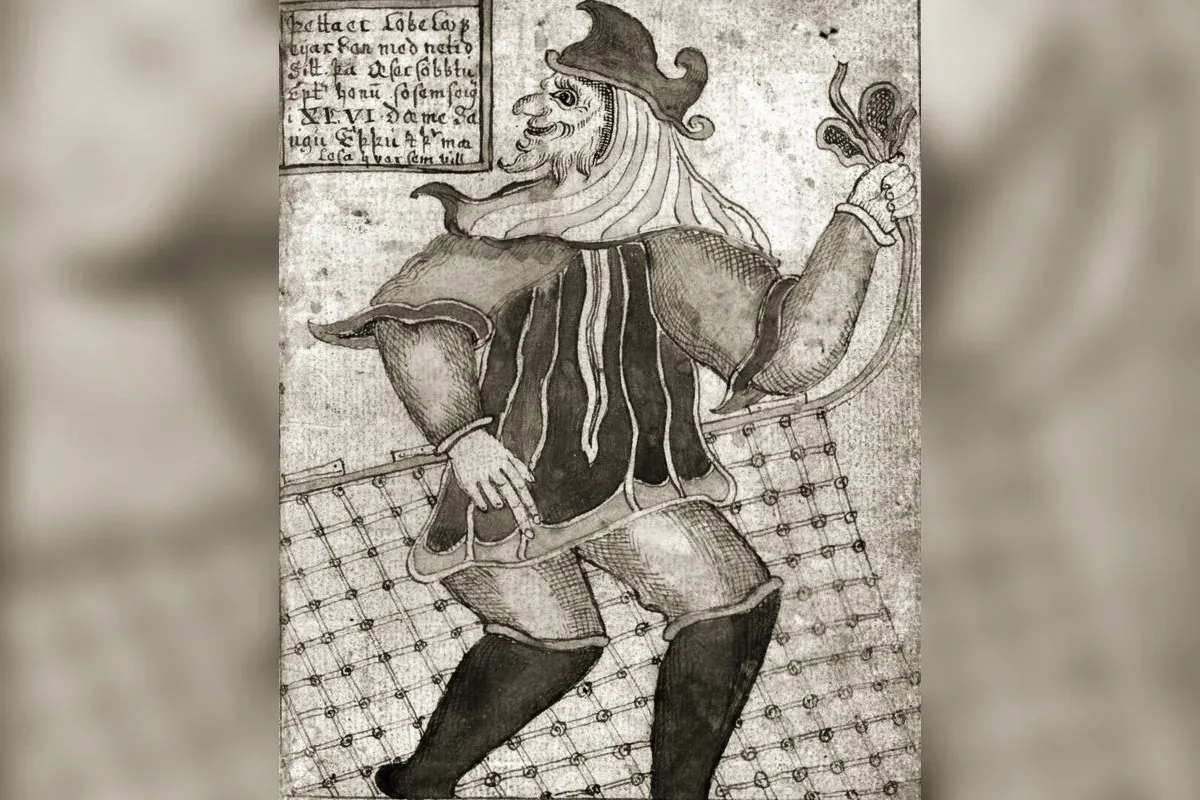
Who is Loki?
Loki is the most complex figure in the Norse pantheon. Neither a god among gods nor an open enemy of the gods, he embodies the fundamental ambiguity of trickery, transformation and chaos in a cosmos hurtling toward its own destruction. An indispensable companion to Odin and Thor in the earliest myths, he gradually becomes the architect of their downfall — making his one of the most tragic destinies in Norse mythology.
Role, nature and cosmic ambiguity
Loki is above all the Trickster: a being of cunning and metamorphosis who knows no absolute loyalty. Son of the giant Fárbauti and Laufey, he is of giant stock yet lives among the Aesir through a blood-brotherhood oath sworn with Odin. This in-between position — simultaneously inside and outside the divine order — gives him his essential narrative role: he crosses boundaries between worlds, between order and chaos, between the Aesir and the Jötnar.
In Norse cosmology, this fluidity is not simply treachery. It is the very engine of myth: without Loki there would be no Mjöllnir, no Sleipnir, no walls of Asgard — and no final catastrophe either.
Shapeshifting as signature
What defines Loki above all is his capacity for unlimited transformation. He shifts into animals (mare, salmon, fly, elderly woman, seal, eagle) and even into a woman — a gender transgression that earns him reproaches from Odin himself in the Poetic Edda, despite Odin being a practitioner of seiðr.
His shapeshifting has direct consequences on the mythology:
- Transformed into a mare, he lures the stallion Svaðilfari to sabotage a giant’s construction of Asgard’s walls — and finds himself pregnant, giving birth to Sleipnir, Odin’s eight-legged horse.
- Transformed into a fly, he disrupts the dwarves Brokkr and Sindri at their forge, causing the too-short handle of Mjöllnir, Thor’s hammer.
- Transformed into a salmon, he attempts to flee the gods who seek him after Baldr’s death — but is caught in a net.
Father of monsters: Fenrir, Jörmungandr, Hel
Loki’s offspring with the giantess Angrboða are the primary vectors of the coming cosmic catastrophe:
Fenrir, the monstrous wolf: the Aesir sense the danger he represents and attempt to bind him. After breaking two chains (Leyding and Drómi), Fenrir is finally bound by Gleipnir, an invisible magical ribbon forged by the dwarves. To convince Fenrir to submit to the test, the god Tyr places his hand in the wolf’s mouth as a pledge — and loses it when Gleipnir proves unbreakable. Fenrir remains chained until Ragnarök, when he will devour Odin.
Jörmungandr (the World Serpent): thrown into the ocean by Odin, it grows until it encircles the entire Earth with its tail in its own mouth. The cosmic enemy of Thor, the two are fated to kill each other at Ragnarök.
Hel: sent by Odin to the depths of Niflheim, she rules the realm of those who died neither in battle nor of a notable cause. Her body is half-living, half-dead: one side has normal skin, the other is bluish and cadaverous.
Loki is also the father, in mare form, of Sleipnir, Odin’s eight-legged steed.
The indispensable accomplice: Loki in service of the gods
In the oldest narratives, Loki frequently travels as Thor’s companion, with his cunning serving the Aesir:
- He retrieves Sif’s golden hair after cutting it off himself, then commissions the dwarves to forge Mjöllnir, the spear Gungnir, and the ring Draupnir.
- He helps recover Mjöllnir after its theft by the giant Þrym by convincing Thor to disguise himself as a bride — see The Theft of Mjolnir.
- He accompanies Thor on the journey to Útgarðr, the hall of the giant master of illusions.
This ambivalence — Loki creates the problem and provides the solution — is characteristic of the oldest layers of Norse mythological narrative.
The death of Baldr: the point of no return
The death of Baldr, the beloved son of Odin and Frigg, is the act that tips Loki irreversibly toward pure chaos.
Baldr begins to have premonitory nightmares. Frigg extracts a pledge from every thing in the world — plants, animals, stones, diseases — never to harm her son. Only mistletoe, deemed too young, is overlooked. The gods then amuse themselves throwing projectiles at Baldr, all of which bounce off harmlessly.
Loki, disguised as an old woman, extracts the one weakness from Frigg. He then guides the hand of the blind Höðr to hurl a mistletoe branch at Baldr — the only object that can kill him. Baldr falls dead.
When the gods try to retrieve him from Hel by having every creature in the world weep, Loki disguises himself as a giantess and refuses — the one condition Hel imposed. The attempt fails. Baldr remains in the realm of the dead until the world’s renewal after Ragnarök.
The punishment of Loki
The gods capture Loki after he insults each of them in turn at a feast (Lokasenna). He is bound in a cave deep underground:
- His sons Váli and Narfi are transformed: Váli metamorphosed into a wolf devours Narfi, and Narfi’s entrails are used to bind Loki to rock ledges.
- A serpent drips venom onto his face.
- His wife Sigyn holds a bowl to collect the poison. When she turns away to empty it, drops fall on Loki — his pain-wracked convulsions cause earthquakes.
Loki remains bound until Ragnarök.
Ragnarök: the unleashing
At Ragnarök, Loki breaks free and leads the forces of chaos. He captains the ship Naglfar, built from the nails of the dead, and steers the giants toward Asgard. He faces Heimdallr, guardian of the gods, and the two slay each other in single combat.
His death closes an existence spent crossing every boundary: between worlds, between races, between loyalty and treachery, between creation and destruction.
What the ancient sources say
The principal sources on Loki are the Poetic Edda (11th–13th century) and Snorri Sturluson’s Prose Edda (c. 1220). The Völuspá announces his breaking free at Ragnarök. The Lokasenna (Loki’s Quarrel) is a poem entirely devoted to his insults against the gods at a feast. The Þrymskviða shows his ingenuity in service of Thor. The Gylfaginning (Prose Edda) synthesises his genealogy and misdeeds.
The comparison between Loki and the Greek Prometheus — bound as punishment, liberator of forbidden forces — is structurally appealing but rests on no direct kinship; it reflects a mythological pattern found across several Indo-European traditions.
Further reading
For the supreme god to whom he is bound by blood-oath, read the page on Odin. For Odin’s son and Loki’s companion in many adventures, see the page on Thor. For the god of light whom Loki condemns to death — the act that tips all Norse mythology toward its end — consult the page on Baldr. For the story where his cunning serves the Aesir loyally rather than ruining them, read The Theft of Mjolnir. For the goddess he first betrays to a giant and then, on pain of death, rescues, see the page on Idunn. The full story of the murder, the refusal of mourning, and Loki’s punishment is told in The Death of Baldr.
See also
Related entries
Frequently asked questions
Is Loki a god or a giant?
Loki is technically of giant lineage — son of the giant Fárbauti and Laufey — but he lives among the Aesir in Asgard, bound to Odin by a blood-brotherhood oath. He embodies the permeability of boundaries in Norse cosmology: neither fully a god nor fully a giant.
Is Loki evil in Norse mythology?
Not initially. In the oldest texts, Loki is first and foremost a useful companion to the gods — he often solves the very problems he has created. His shift toward pure malevolence comes after the death of Baldr, for which he is directly responsible. Snorri Sturluson's Prose Edda portrays him more systematically negatively than the older poetic sources.
How is Loki punished in Norse mythology?
After Baldr's death, the gods capture Loki and chain him in a cave. A serpent drips venom onto his face. His wife Sigyn holds a bowl to catch the poison, but when she turns away to empty it, drops fall on Loki — his convulsions of pain are said to cause earthquakes according to Norse tradition.