Greek mythology · Heroes & mortals
Hecuba, queen of Troy in Greek mythology
Hecuba of Troy: mother of Hector, the two children she loses after the city falls, the revenge she takes, and the headland named after her.
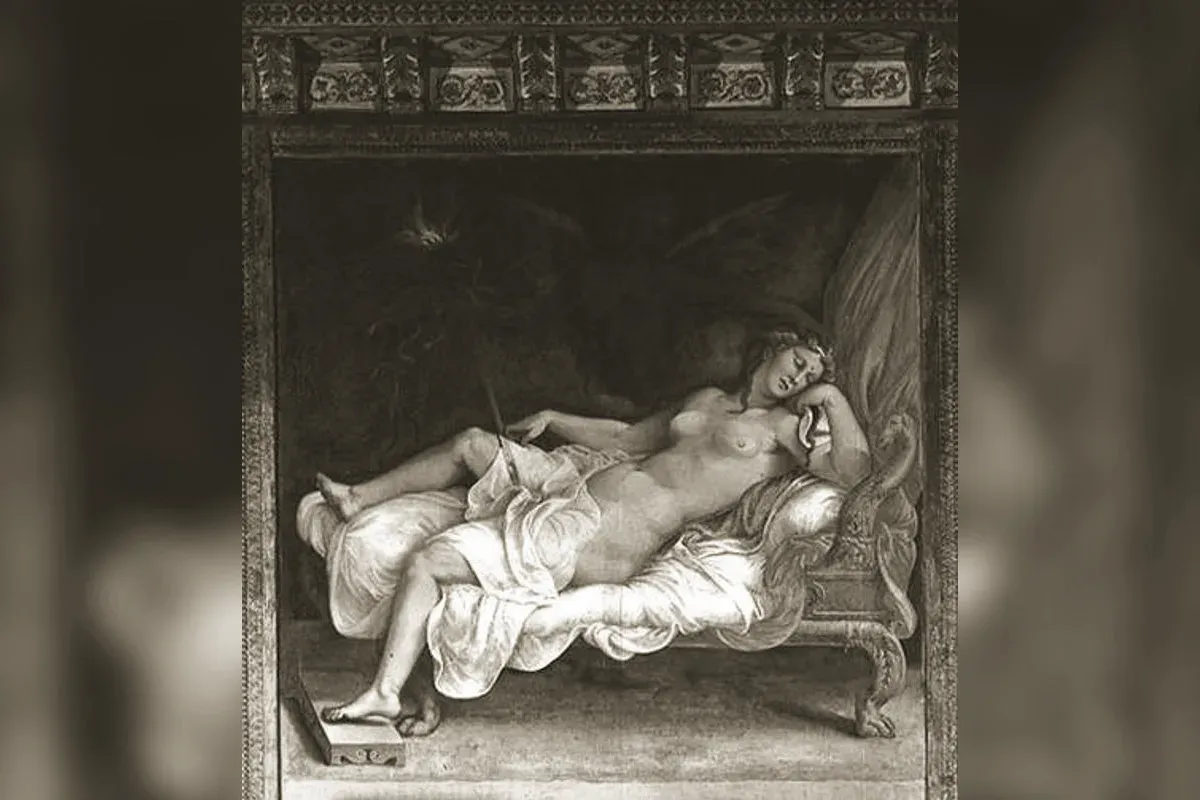
Hecuba is the queen of Troy, wife of Priam and mother of Hector. In Homer she is a secondary figure who appears mainly to grieve. In Athenian tragedy she becomes something else entirely: the subject of two plays, and one of the few characters in Greek literature who is destroyed slowly enough for the audience to watch it happen.
In the Iliad
Homer gives her three scenes and they are all about her son. She offers a robe to Athena to keep him safe. She stands on the wall in Book 22 and, when argument fails, bares her breast to Hector and begs him by the milk she fed him not to face Achilles alone. He does not look up.
She speaks the last of the three laments that close the poem, after Andromache and before Helen — and hers is the angriest. She notes that her son’s body, dragged for twelve days behind a chariot, lies fresh as though the gods themselves had refused to let it be spoiled.
After the city falls
Euripides’ Hecuba, staged around 424 BCE, begins where the epic stops. Troy has fallen, the women are captives on the Thracian shore waiting for a wind, and Hecuba has two children left.
Polyxena, her daughter, is demanded by the ghost of Achilles as a grave-offering and taken to be sacrificed. She goes without struggling, and the messenger who reports it dwells on her composure — a girl choosing the manner of her own death because it is the only thing left she can choose.
Polydorus, her youngest son, had been sent for safekeeping before the siege to Polymestor, king of Thrace, along with a quantity of Trojan gold. Polymestor killed him for the gold and threw the body into the sea. It washes ashore in front of his mother on the same day.
The revenge
What Hecuba does next is why the play survives. She obtains permission from Agamemnon — not mercy, permission — and sends word to Polymestor that more Trojan treasure is hidden and she will tell him where.
He comes into the women’s tent with his two small sons. The captive women surround them, admiring the children’s clothes, handling the fabric. Then they draw hidden blades. They kill the boys in front of their father and drive brooch-pins into his eyes.
Blinded, Polymestor crawls out and prophesies over her: she will be transformed into a dog with burning eyes, will fall from the ship’s mast into the sea, and the headland where she falls will be called Cynossema, the Dog’s Tomb.
The dog’s tomb
That place existed. Cynossema is a real promontory on the Thracian Chersonese, at the narrows of the Hellespont; Thucydides records a naval battle fought off it in 411 BCE, some thirteen years after Euripides put the prophecy on stage.
This is the most interesting thing about Hecuba’s ending. Greek myth regularly explains a landmark by attaching a story to it, and here the story is one of total moral collapse: the queen of a great city, made a slave, who murders children to avenge a child, and is turned into an animal at the exact moment she stops being recognisable as human. Athenian sailors passing that headland during the Peloponnesian War would have known both the name and the reason for it.
Ancient sources
- Homer, Iliad, 6.251-285; 22.79-89; 24.747-760
- Euripides, Hecuba (esp. 1132-1295) and Trojan Women
- Ovid, Metamorphoses, 13.399-575
- Thucydides (8.104-106) for the site
See also
Related entries
Stories featuring this entity
Frequently asked questions
What does Hecuba do to Polymestor?
She sends word that more Trojan treasure is hidden and that she will show him where. He comes into the women's tent with his two small sons. The captive women surround them, admiring the children's clothes and handling the fabric — then draw hidden blades, kill the boys in front of their father, and drive brooch-pins into his eyes. She obtains Agamemnon's permission first: not his mercy, his permission.
Is Cynossema a real place?
Yes. The blinded Polymestor prophesies that Hecuba will become a dog and that the headland where she falls will be called Cynossema, the Dog's Tomb. That promontory exists, on the Thracian Chersonese at the narrows of the Hellespont, and Thucydides records a naval battle fought off it in 411 BCE — some thirteen years after Euripides put the prophecy on stage.