Greek mythology · Heroes & mortals
Eteocles, king of Thebes and brother of Polynices in Greek mythology
Eteocles, son of Oedipus: the year of rule he refused to surrender, the seven gates of Aeschylus, and a fatal duel with his own brother.
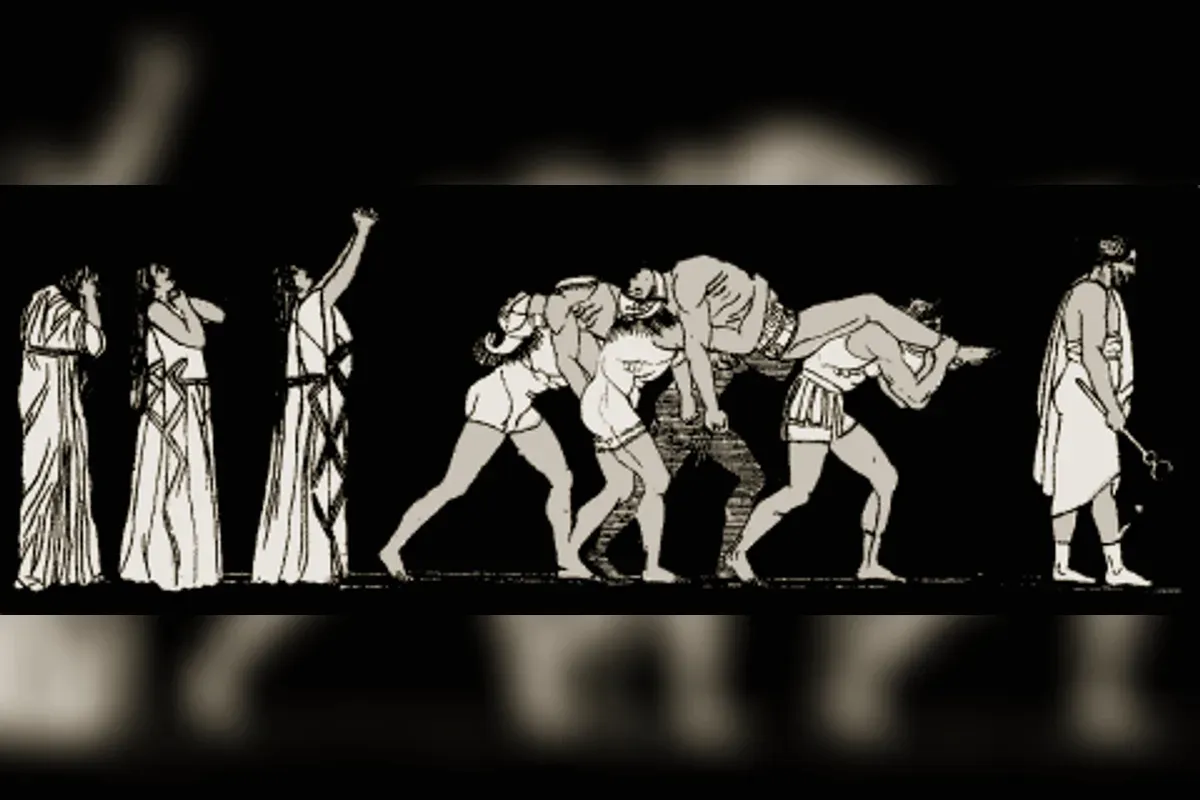
Eteocles is the son of Oedipus and Jocasta who holds Thebes against the army his brother brings to take it. He is the only figure in the Theban cycle who is simultaneously the legitimate defender of a city and the man whose broken word caused the attack.
The year that was never surrendered
After Oedipus falls, the brothers agree to rule Thebes in alternate years. In the most common version Eteocles takes the first term and then refuses to hand over, and Polynices leaves for Argos to raise an army.
The tradition is not unanimous about the blame. Some accounts have the brothers casting lots; some have Polynices leaving with the royal heirlooms, including the necklace of Harmonia, which makes his exile less innocent; Euripides gives Eteocles a frank speech in which he says outright that he would commit any injustice for the sake of ruling, and calls sovereignty the greatest of the gods. Greek tragedy declines to supply a clean brother. Both convert a succession dispute into a war that kills thousands.
The seven gates
Aeschylus’s Seven Against Thebes is built almost entirely out of one device. A scout describes each of the seven attacking champions posted at each of the seven gates — his blazon, his boast, his temperament — and Eteocles answers each description by naming the Theban who will meet him, matching character against character and turning the shield-emblems against their bearers.
Through six pairings he is exactly what a city under siege needs: composed, quick, contemptuous of panic, and a genuinely good reader of men. Then the scout reaches the seventh gate and names Polynices, whose shield shows Justice leading an exile home.
Eteocles hears the curse arrive. He knows what facing this gate means, and he goes — not because he must, but because he chooses, and Aeschylus makes the choice look simultaneously like duty, like fatalism, and like hatred. The brothers kill each other in the gateway. Thebes holds.
An ending that was probably added later
The text of Seven as it survives does not stop with the double death. It continues with a herald announcing Creon’s burial ban and Antigone declaring she will defy it.
Most modern editors regard this closing scene as a fourth-century addition, written into Aeschylus’s play after Sophocles’ Antigone had made the burial conflict the famous part of the story. If they are right, the sequence readers know as one continuous myth is partly a stitching-together of separate plays by later hands — and Aeschylus’s own Eteocles ends where the war ends, with no Antigone in view at all.
Defender or oath-breaker
Eteocles receives full civic burial as the man who saved Thebes; his brother is left on the field. That distinction, more than the duel itself, is what generates the rest of the cycle.
His name means “true glory”, and the irony is deliberate. He earns military glory of an unmistakably real kind, and it settles nothing: the city survives, its ruling house does not, and the war he won produces the next crisis before his body is cold.
Ancient sources
- Aeschylus, Seven Against Thebes, 375-719
- Euripides, Phoenician Women, 499-525
- Sophocles, Antigone
- Apollodorus, Library, 3.6
See also
Frequently asked questions
How is Seven Against Thebes built?
Almost entirely out of one device. A scout describes each of the seven attacking champions posted at each of the seven gates — his blazon, his boast, his temperament — and Eteocles answers each portrait by naming the Theban who will meet him, matching character against character. Through six pairings he is exactly what a besieged city needs. Then the scout reaches the seventh gate and names his brother.
Is the ending of Seven Against Thebes authentic?
Probably not. The surviving text does not stop at the double death: it continues with a herald announcing Creon's burial ban and Antigone declaring she will defy it. Most modern editors regard that closing scene as a fourth-century addition, written into Aeschylus's play after Sophocles' Antigone had made the burial conflict the famous part of the story.